


Gongzheng
Gongzheng
Gongzheng
Gongzheng
Gongzheng
Gongzheng
Gongzheng
Gongzheng
Gongzheng
Gongzheng
Gongzheng
Gongzheng
Gongzheng
Gongzheng
Gongzheng
Gongzheng

Novità del settore
Costruire una linea di sicurezza in frenata: la composizione e i dettagli di manutenzione dell'impianto frenante ad aria compressa

Quali sono i componenti principali dell'impianto frenante ad aria compressa del camion?
Il impianto frenante ad aria compressa per camion rappresenta un'importante garanzia per la guida sicura dei veicoli di grandi dimensioni. Si basa sull'aria compressa per azionare il dispositivo di frenatura per ottenere un effetto frenante efficiente e affidabile. Il sistema ha una struttura complessa ed è composto da una varietà di componenti professionali. Le varie parti cooperano tra loro per garantire che il veicolo possa frenare stabilmente in diverse condizioni di lavoro.
Compressore d'aria
Il air compressor is the power source of the entire air brake system. Its main function is to use the engine power to compress the air, compress the air in the atmosphere to a high pressure state, and provide the system with the air source required for braking. The air compressor is usually driven by the engine crankshaft belt, with a sturdy structure and high working efficiency. The compressed air has a high pressure and temperature and needs to be processed later before it can be used.
Asciugatore d'aria
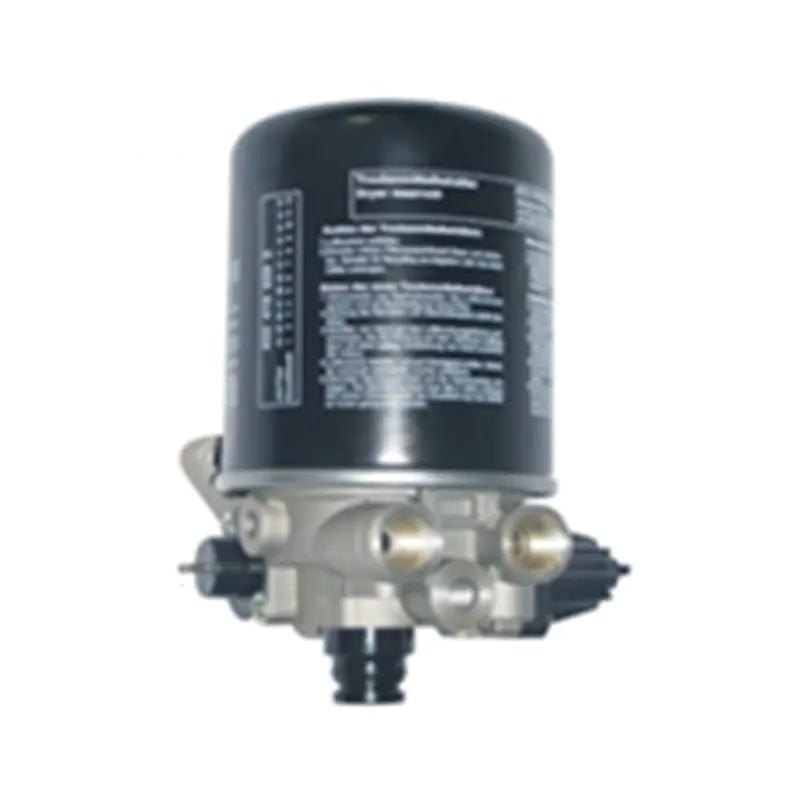
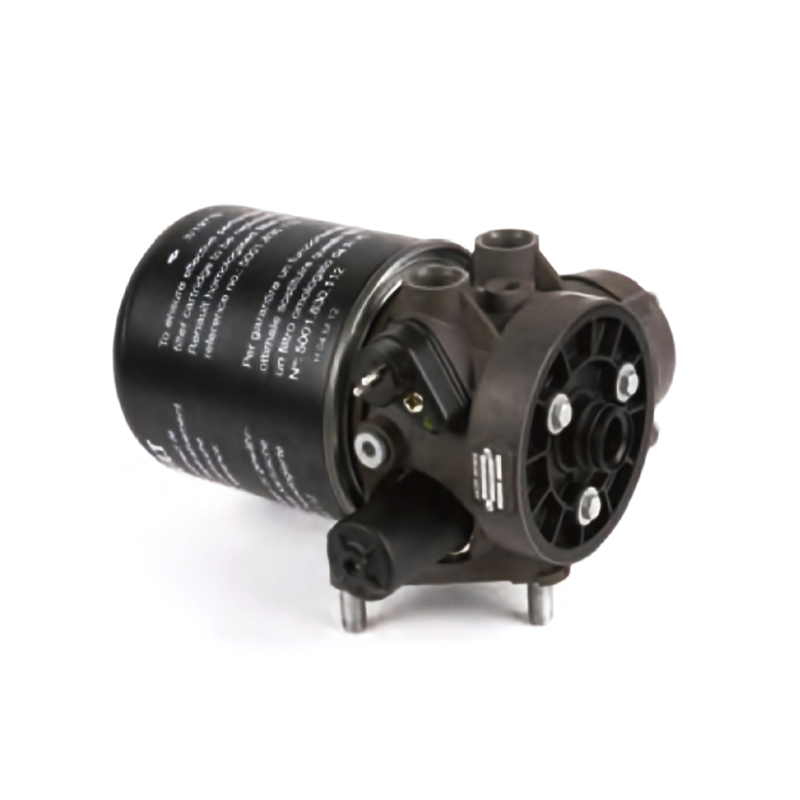
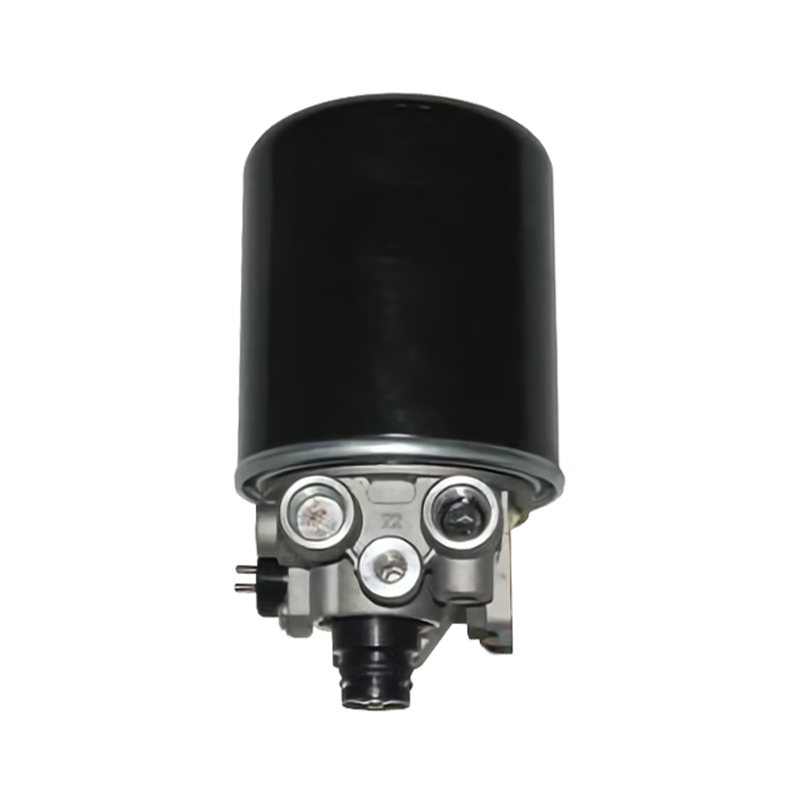
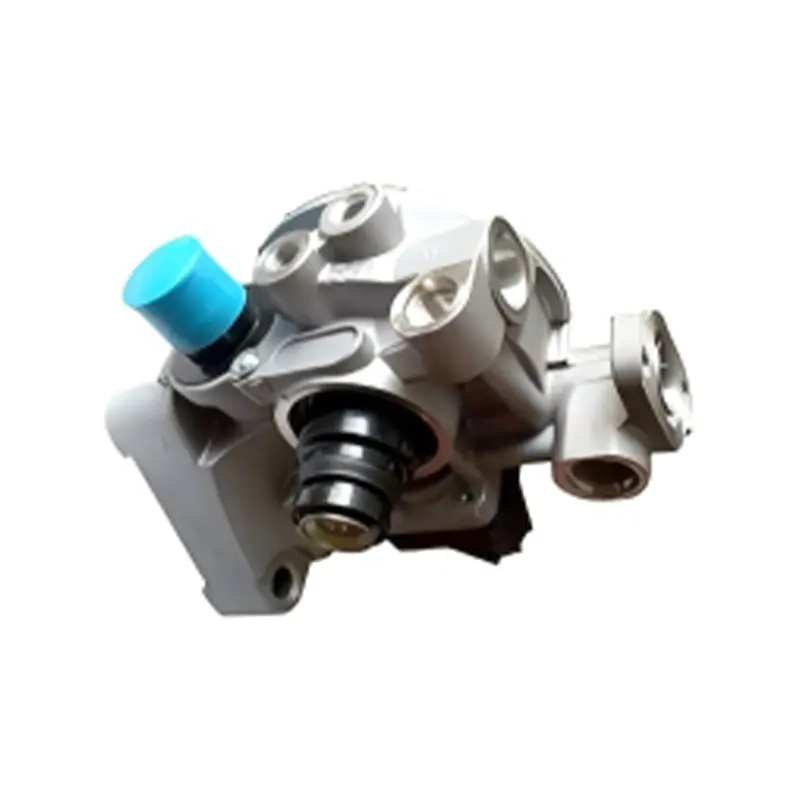
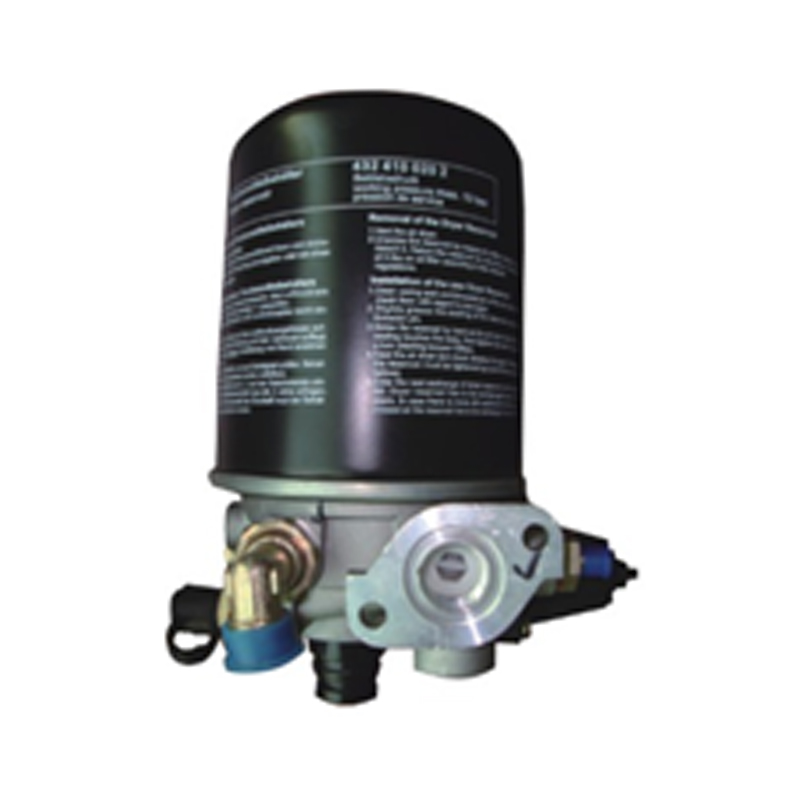
Il air dryer is installed between the air compressor and the air tank. Its main function is to remove moisture and oil from the compressed air to prevent ice and corrosion inside the system. If the moisture in the air is not removed in time, it will cause the brake line to freeze in cold weather, seriously affecting the braking performance. The air dryer contains a desiccant inside, which can effectively absorb moisture, and is equipped with an automatic drainage device to keep the air dry and clean.
Serbatoio dell'aria
Il air tank is used to store compressed air that has been dried to ensure that the brake system has a stable and continuous air supply when in use. The air tank is usually divided into a main air tank and an auxiliary air tank, and the capacity is determined according to the size of the vehicle and the braking demand. Condensation often accumulates inside the air tank and needs to be discharged regularly to prevent internal corrosion and blockage of the pipeline.
Valvola del freno (valvola del freno a pedale)
Il brake valve is a key component for the driver to control air brakes. When the brake pedal is pressed, the brake valve adjusts the air pressure to the brake chamber, drives the brake mechanism to operate, and achieves vehicle deceleration or parking. The brake valve used in modern trucks usually integrates pressure feedback and multi-stage adjustment functions to ensure sensitive braking response and safety and reliability.
Camera d'aria del freno
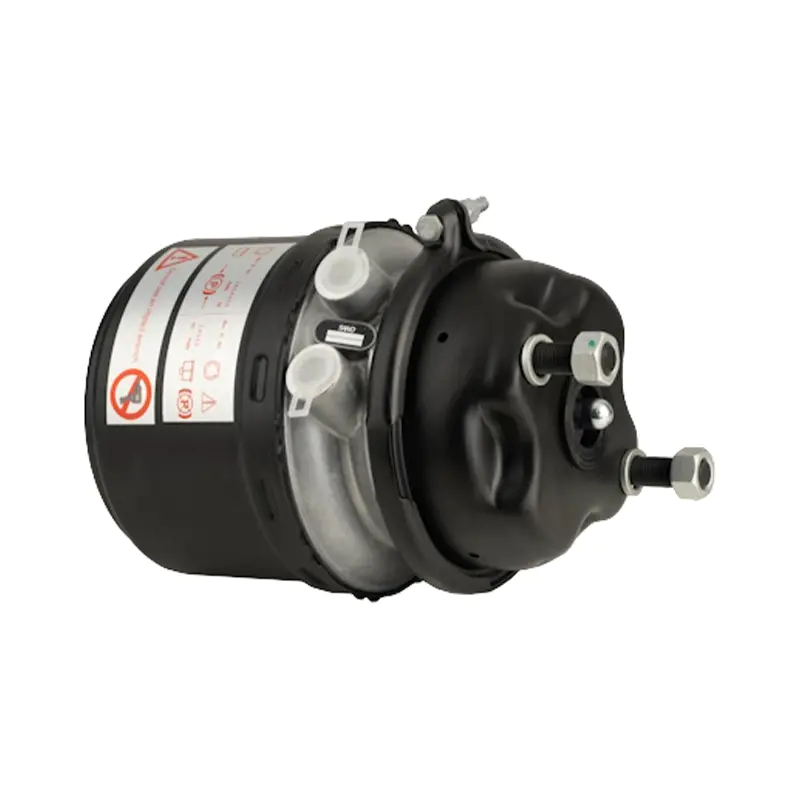
Il brake air chamber is the core component that converts air pressure into mechanical force. A diaphragm or piston is arranged in the air chamber, which pushes the connecting rod after receiving the air pressure from the brake valve, and drives the brake shoe or brake pad to press the brake drum or brake disc. Brake chambers are divided into service brake chambers and spring brake chambers. The service brake chamber is mainly responsible for braking when the vehicle is driving, while the spring brake chamber is used for parking and emergency braking.
Camera del freno a molla
Il spring brake chamber is equipped with a strong preload spring, which uses the mechanical force of the spring to maintain the braking state. This component is mostly used for parking brakes to ensure that the vehicle does not slip when parking. After the engine is started and inflated, the air pressure will compress the spring and release the braking state. The safety performance of the spring brake chamber is extremely important, and the integrity and air pressure of the spring need to be checked regularly.
Biella e regolatore freno
Il brake connecting rod transmits the thrust of the brake chamber to the brake mechanism to complete the conversion of air pressure to mechanical force. The regulator is responsible for automatically or manually adjusting the gap between the brake shoe and the brake drum to compensate for the wear of the brake shoe and maintain the braking efficiency. The automatic regulator can reduce the frequency of manual adjustment and improve the stability and safety of the system.
Linea del freno
Il brake line includes the air pipeline connecting the compressor, air tank, brake valve and air chamber. The pipeline material must be resistant to high pressure, corrosion and cold, and is usually made of a combination of rubber hoses and steel hard pipes. Reasonable pipeline design can prevent air pressure leakage and mechanical damage, and is the basis for ensuring the air tightness and stability of the brake system.
Valvola di sicurezza
Il safety valve is installed at the air tank and key pipeline positions to prevent the system air pressure from exceeding the set upper limit. When the system air pressure rises abnormally, the safety valve automatically opens to release excess gas to avoid bursting of the air tank or pipeline and ensure system safety. The safety valve must be inspected regularly to ensure its reliability.
Dispositivi ausiliari
Il air brake system is equipped with a variety of auxiliary devices, such as barometers, air pressure alarms and pressure sensors. The barometer provides the driver with real-time air pressure information, and the air pressure alarm sounds an alarm when the air pressure is lower than the safety threshold, reminding the driver to deal with it in time. The pressure sensor provides data support for the vehicle's electronic control unit to ensure intelligent management of the system.
In che modo la camera del freno converte la pressione dell'aria in forza meccanica?
Il brake chamber is a key actuator in the truck air brake system. Its core function is to convert the air pressure energy of compressed air into mechanical force, thereby driving the brake mechanism to slow down or stop the vehicle. The design structure and working principle of the brake chamber are directly related to the response speed of the brake system and the stability of the braking force.
Struttura di base della camera del freno
Il brake chamber is mainly composed of a chamber shell, a diaphragm (or piston), a push rod and a spring. The chamber shell is made of solid metal material, and the interior is divided into two main spaces: the air pressure chamber and the spring chamber. The diaphragm is usually made of wear-resistant rubber material, with good sealing performance and can withstand repeated changes in air pressure. The push rod connects the diaphragm or piston to transmit the thrust generated by the air pressure to the brake mechanical part.
Distinzione funzionale tra camera ad aria compressa e camera a molla
Il air pressure chamber is the part of the brake chamber that receives compressed air. Air enters the air pressure chamber from the brake valve through the pipeline, and the air pressure increases, pushing the diaphragm or piston outward. The spring chamber is equipped with a preloaded spring to provide reverse force and is used for parking brakes. When the air pressure is low, the spring force pushes the push rod back to the initial position and releases the brake state.
Principio di funzionamento della conversione della pressione dell'aria in forza meccanica
Quando il conducente preme il pedale del freno, la valvola del freno introduce aria compressa nella camera di pressione dell'aria della camera dell'aria del freno. La pressione dell'aria nella camera ad alta pressione aumenta rapidamente, agendo sulla superficie della membrana per generare spinta. L'entità della spinta è proporzionale alla pressione dell'aria e all'area del diaframma. La membrana si espande verso l'esterno sotto l'azione della pressione dell'aria, spingendo l'asta di spinta collegata a muoversi assialmente. Il movimento dell'asta di spinta aziona la biella e il meccanismo di regolazione per convertire l'energia della pressione dell'aria in forza meccanica, che viene applicata alla ganascia o alla pastiglia del freno per ottenere il bloccaggio del tamburo o del disco del freno.
Trasmissione meccanica del movimento dell'asta di spinta
Il end of the push rod is usually connected to the brake connecting rod through a pin or a ball head. The axial movement of the push rod drives the brake mechanism to work. The brake connecting rod converts the linear motion of the push rod into the clamping motion of the brake shoe, forming friction and generating braking force. The distance the push rod moves determines the magnitude of the braking force, and a reasonable push rod stroke design ensures the linearity and sensitivity of the braking effect.
Il difference between diaphragm and piston and their influence
Il diaphragm structure in the brake chamber uses a flexible diaphragm to transmit air pressure thrust. It has a simple structure and light weight, and is suitable for light and medium trucks. The piston chamber uses a rigid piston instead of a diaphragm, which has better sealing and is suitable for heavy vehicles. The piston structure reacts faster to changes in air pressure, and the mechanical force transmission is more stable, which improves braking performance and reliability.
Funzioni speciali delle camere dei freni a molla
Il spring brake chamber is equipped with a large preload spring outside the air pressure chamber, which is often used for parking brakes. During normal operation, the air pressure compresses the spring, the push rod is in a loose state, and the brake is released. When parking or emergency braking, the system air pressure is cut off, the spring releases energy to push the push rod, and the mechanical force acts on the brake mechanism to lock the wheel and achieve parking brake. The spring brake chamber ensures that the vehicle can remain in a safe parking state even if the air source is interrupted.
Tenuta all'aria e velocità di risposta della camera del freno
Il air tightness inside the chamber directly affects the effective conversion and response speed of air pressure energy. Poor sealing will cause air pressure leakage, weaken the push rod pushing force, and increase the risk of brake failure. High-quality diaphragm materials and sealing design ensure that the brake chamber maintains good performance under extreme working conditions. The rapid air pressure charging and discharging process ensures rapid braking response and improves driving safety.
Manutenzione e manifestazioni di guasto delle camere dei freni
Difetti comuni come la rottura dei diaframmi della camera del freno, l'inceppamento dell'asta di spinta o l'affaticamento della molla possono portare al guasto del freno o al guasto del freno di stazionamento. Il controllo regolare della tenuta della camera d'aria e il rilevamento della corsa dell'asta di spinta e dello stato della molla sono la chiave per garantire l'affidabilità del sistema frenante. I test della pressione dell'aria e il rilevamento delle perdite possono rilevare in anticipo i pericoli nascosti ed evitare incidenti di guida.
| Camera freno a corsa lunga | |||||||||||||||||||||||||||||||||||||||||||||||||||||||||||||||||||||||||||||
|

Perché gli essiccatori d'aria sono importanti per i sistemi frenanti ad aria compressa
Asciugatore d'arias are an indispensable key component in truck air brake systems. Its main function is to remove moisture and impurities from compressed air to ensure the normal operation and long-term durability of the internal pipes and components of the brake system. The role of air dryers is directly related to the reliability, safety and maintenance cost of the brake system.
Umidità nell'aria compressa e suoi rischi
Il air brake system relies on an engine-driven air compressor to supply high-pressure air. After the air is compressed, the temperature rises, and the water vapor in the air begins to condense into water droplets during the cooling process. If these moisture are not effectively treated, they will enter the air tank and pipeline with the air, causing a variety of serious problems. Condensed water accumulates inside the pipeline and may freeze in a low temperature environment, blocking the air path and causing brake failure. Moisture can also cause rust and corrosion of internal parts of the system, reduce equipment life and cause leaks. Excessive moisture can also affect air pressure stability and cause insensitive brake response.
Principio di funzionamento dell'essiccatore
Asciugatore d'arias are usually installed between the air compressor and the air tank. Its core part is a desiccant (such as silica gel or molecular sieve), which can efficiently absorb moisture from the air. When compressed air enters the dryer, moisture is absorbed by the adsorbent, and the air discharged after treatment remains dry and clean. Modern air dryers are mostly equipped with automatic drain valves to regularly discharge moisture and impurities accumulated in the adsorbent to prevent water accumulation and blockage, ensuring a long-lasting and stable drying effect.
Prevenire la rottura del ghiaccio nel sistema frenante
In ambienti a bassa temperatura, l'umidità nella tubazione dell'aria è molto facile da congelare, bloccando la valvola del freno e la camera d'aria, causando guasti ai freni o addirittura perdita di controllo del veicolo. Gli essiccatori d'aria rimuovono efficacemente l'umidità e prevengono l'accumulo di acqua di condensa, riducendo notevolmente il rischio di blocco del ghiaccio. Soprattutto per i veicoli che viaggiano in zone fredde o in inverno, l'importanza degli essiccatori d'aria è particolarmente importante, che garantisce direttamente la sicurezza e la stabilità della frenata del veicolo.
Proteggi i componenti chiave del sistema frenante
Il internal pipes, valves, air chambers and air tanks of the braking system are all precision machinery and sealing components, which are extremely susceptible to moisture erosion. Long-term water vapor intrusion can cause metal rust, aging of sealing rings, and valve jamming, affecting braking performance. Air dryers extend the service life of these key components by providing dry air, reduce failure rates and maintenance costs, and improve the overall operating efficiency of vehicles.
Migliora la stabilità della pressione dell'aria del sistema e la velocità di risposta
L'eccessiva umidità può causare fluttuazioni e perdite della pressione dell'aria, compromettendo la tenuta e la stabilità della pressione dell'aria del sistema frenante. Gli essiccatori d'aria possono garantire che l'aria che entra nel serbatoio e nelle tubazioni sia secca e pura e garantire una fornitura stabile di pressione dell'aria. La pressione dell'aria stabile supporta l'azione efficiente della camera del freno, migliora la velocità di risposta della frenata e la forza frenante e migliora la sicurezza di guida.
Ridurre le difficoltà e i costi di manutenzione
I sistemi senza essiccatori d'aria o con scarsi effetti di essiccazione richiedono frequenti drenaggi, pulizia dei tubi e sostituzione di parti corrose e danneggiate, aumentando la frequenza e i costi di manutenzione. Gli essiccatori d'aria riducono gli interventi manuali e il carico di lavoro di manutenzione deumidificando e drenando automaticamente l'acqua. Il tasso di guasto del sistema diminuisce, il tempo di funzionamento del veicolo aumenta e i costi operativi sono significativamente ridotti.
Tipi e scenari applicabili di essiccatori d'aria
Gli essiccatori d'aria comuni includono essiccatori ad adsorbimento ed essiccatori a refrigerazione. Gli essiccatori ad adsorbimento assorbono l'umidità attraverso l'essiccante, hanno una struttura semplice e sono ampiamente utilizzati nei sistemi frenanti ad aria compressa dei camion. Gli essiccatori a refrigerazione condensano e scaricano l'umidità abbassando la temperatura dell'aria, adatta a requisiti ambientali speciali. Diversi tipi di essiccatori vengono combinati con l'ambiente operativo del veicolo e le condizioni di lavoro per selezionare il modello appropriato e garantire il miglior effetto di asciugatura.
Punti chiave per la manutenzione degli essiccatori d'aria
L'essiccante deve essere sostituito regolarmente per evitare la mancata saturazione dell'essiccante. La funzione della valvola di scarico deve essere mantenuta normalmente per garantire la rimozione tempestiva dell'acqua di condensa e delle impurità. È necessario controllare che l'alloggiamento e l'interfaccia dell'essiccatore d'aria non presentino perdite e abbiano buone prestazioni di tenuta. Una manutenzione impropria causerà il guasto dell'essiccatore, il che a sua volta influirà sulle prestazioni di sicurezza dell'intero sistema frenante.
| Essiccatore dell'aria del sistema frenante | |||||||||||||||
|

In che modo la valvola del freno (valvola di fondo) controlla la pressione dell'aria del freno?
Il brake valve, also known as the foot brake valve, is a key component in the truck air brake system where the driver directly controls the brake air pressure. Its main function is to accurately adjust the air pressure according to the force and stroke of the driver's foot on the brake pedal, and drive the brake chamber to achieve vehicle braking. The design and working principle of the brake valve directly affect the response speed, stability and safety performance of the brake system.
Struttura base della valvola freno
Il brake valve is mainly composed of a valve body, a piston or a sliding valve, a spring, a sealing ring and an adjustment mechanism. There are multiple air passages inside the valve body, which are responsible for guiding the air flow. The piston or sliding valve moves under the action of the spring force and air pressure to control the air flow interruption. The brake pedal drives the piston to move through a mechanical connecting rod or an electronic sensor to complete the air pressure regulation.
Principio di funzionamento della valvola del freno
Quando il conducente preme il pedale del freno, il pistone all'interno della valvola del freno si sposta in avanti insieme alla corsa del pedale. Il movimento del pistone modifica lo stato di apertura e chiusura del circuito dell'aria all'interno del corpo valvola e controlla l'aria dal serbatoio dell'aria alla camera di pressione dell'aria della camera del freno. Più si preme il pedale in profondità, maggiore è l'apertura della valvola e maggiore è la pressione dell'aria che entra nella camera del freno. L'aumento della pressione dell'aria spinge il diaframma o il pistone della camera del freno, generando una spinta meccanica per ottenere la frenata. Rilasciare il pedale, il pistone si ripristina, il circuito dell'aria viene chiuso, la pressione dell'aria viene rilasciata e il freno viene rilasciato.
Controllo preciso della regolazione della pressione dell'aria dei freni
Il brake valve achieves continuous variable adjustment of air pressure through an internal adjustment mechanism. The valve body is designed with a pressure adjustment spring and a feedback device, which can finely adjust the output air pressure according to the pedal force. Accurate air pressure control ensures a smooth transition of braking force, avoids braking shock and vehicle shaking, and improves driving comfort and safety.
Progettazione del circuito dell'aria a più vie e garanzia di sicurezza
Il brake valve is equipped with multiple air circuits, which lead to different air tanks and air chambers to ensure stable air pressure supply. Some brake valves are equipped with a dual-circuit design, one circuit controls the front axle air chamber and the other controls the rear axle air chamber to improve braking safety. Some advanced brake valves also have an air pressure protection function. When the system air pressure is lower than the set value, the braking force is automatically limited to prevent brake failure.
Velocità di risposta e prestazioni di tenuta della valvola del freno
Il internal sealing ring and air circuit design of the brake valve directly affect the response speed of air pressure changes. Efficient sealing prevents air leakage and ensures stable air pressure. The brake valve with a compact structure and reasonable spring force can quickly respond to the driver's braking command, achieve rapid braking response, and enhance driving safety.
Coordinamento della valvola del freno a pedale e del sistema del freno di stazionamento
Il foot brake valve is mainly responsible for service braking during driving. The brake valve of some models integrates the parking brake function or is linked with the parking brake valve. The spring brake chamber is controlled by air pressure changes to realize the opening and release of the parking brake. The system design ensures that the parking brake and foot brake work together to meet different driving needs.
Manutenzione e manifestazioni di guasto delle valvole freno
L'invecchiamento delle guarnizioni delle valvole dei freni, l'inceppamento del pistone o il guasto della molla sono cause comuni di guasto. Ciò porta ad una regolazione insensibile della pressione dell'aria, perdite d'aria o frenate irregolari. Controllare regolarmente la tenuta d'aria, la corsa del pedale e lo stato dei componenti interni della valvola del freno per garantirne il normale funzionamento. Se viene riscontrato un guasto, è necessario ripararlo o sostituirlo in tempo per evitare rischi per la sicurezza.
Che ruolo gioca la valvola di sicurezza nell'impianto frenante ad aria compressa?
Il safety valve is a vital protective component in the air brake system. It is responsible for releasing excess air pressure when the system pressure rises abnormally, preventing system components from being damaged by overpressure, and ensuring the safety and stable operation of the entire brake system. Although the safety valve does not directly participate in the braking action, it plays an important role in the operation of the system.
Il basic structure and principle of the safety valve
Il safety valve is usually composed of a valve body, a valve seat, a spring, a valve core and an adjustment mechanism. The valve core seals the valve seat under the action of the spring force to maintain the closed state of the system. The spring preload sets the maximum safe air pressure of the system. When the system air pressure exceeds the set value, the air pressure overcomes the spring force to push the valve core open, and the overpressure gas is released through the exhaust port. After the air pressure drops to a safe range, the spring resets the valve core, reseals the valve seat, and the system returns to normal working state.
Controllare il limite superiore della pressione dell'aria per prevenire la sovrapressione del sistema
Il air brake system is supplied with air by an air compressor. If the control system fails or the compressor continues to work without stopping, the air pressure may continue to rise. Overpressure can damage and even burst components such as air reservoirs, brake valves, pipelines, and air chambers. The safety valve opens the exhaust in time before the air pressure reaches a dangerous level through the set opening pressure (usually 10%~15% of the upper limit of the system working pressure), playing the role of "the last line of defense" to avoid system damage and accidents.
Proteggere il compressore d'aria e i componenti del circuito dell'aria
Il air compressor is a high-frequency component in the brake system, and it is very easy to be damaged due to excessive back pressure during long-term operation. The safety valve releases excess air pressure in the system compression chamber or the main air tank, effectively reducing the compressor load and preventing problems such as shaft seal damage and cylinder jamming caused by back pressure. At the same time, the safety valve also protects the pipeline interface and air circuit valve to avoid impact rupture caused by sudden pressure changes and extend the service life of the system.
Garantire il funzionamento stabile del sistema frenante del veicolo
Il air brake system must operate in a stable air pressure environment. Excessive air pressure not only damages the components, but also causes excessive braking response and excessive braking force, causing tire locking and vehicle loss of control. The safety valve limits the peak pressure and keeps the system pressure within a safe range, ensuring that the braking response is linear and controllable, and enhancing the driver's sense of safety and predictability.
Il rationality of the set pressure value and the system match
Il opening pressure of the safety valve should be higher than the normal working pressure of the brake system (usually 0.81.0 MPa), but lower than the maximum pressure bearing capacity of the system. It is generally set to 1.11.2 MPa. If the pressure is set too low, it is easy to open frequently and cause unstable air pressure; if it is set too high, it loses its protective effect. Reasonable setting requires comprehensive consideration of factors such as vehicle air path volume, braking frequency, and compressor air output to ensure that the safety valve intervenes only under real overpressure conditions, taking into account safety and system efficiency.
Luogo di installazione e ambito di azione della valvola di sicurezza
Il safety valve is usually installed on the main air tank or the main line of the total air path, giving priority to releasing the total pressure of the system. Some systems are also equipped with local safety valves on branch air tanks or independent air paths to protect branch circuit components. The installation location should ensure smooth exhaust and stay away from high temperature or flammable areas to prevent secondary risks caused by exhaust. The multi-level protection design enhances the robustness of the system and improves the safety level of the vehicle.
Requisiti di materiale e durabilità delle valvole di sicurezza
Valvola di sicurezzas are subjected to high-pressure gas for a long time, and key components such as valve cores, springs, and valve seats must have high strength, corrosion resistance, and fatigue resistance. Common materials include stainless steel, chromium-molybdenum alloy, engineering plastics, etc. The sealing part must have high temperature resistance and pressure change resistance to ensure that the valve remains sealed reliably during high-frequency opening and closing to avoid air pressure leakage or malfunction.
Ispezione di manutenzione e rischio di guasto delle valvole di sicurezza
Valvola di sicurezzas are passive action devices. Long-term non-operation is prone to problems such as spring fatigue, valve core jamming, and seal aging. Regular opening and closing tests, cleaning of carbon deposits and foreign matter, and testing of opening pressure are necessary means to maintain its functional reliability. A failed safety valve may not be able to open when overpressure occurs, resulting in system damage or accidents; it may also open prematurely, affecting the inflation speed and efficiency of the brake system.
Cooperazione tra valvola di sicurezza e sistema di regolazione della pressione
Gli impianti frenanti ad aria compressa sono solitamente dotati di regolatori di pressione, pressostati e valvole di sicurezza che lavorano insieme. Il regolatore di pressione controlla l'avvio e l'arresto del compressore, il pressostato monitora il feedback della pressione dell'aria e la valvola di sicurezza viene utilizzata come dispositivo di protezione ridondante per garantire l'efficacia di molteplici meccanismi di sicurezza. La progettazione e la regolazione della valvola di sicurezza devono essere coordinate con l'intero sistema di controllo della pressione dell'aria per evitare false attivazioni o funzioni di sovrapposizione e migliorare la sicurezza generale del sistema.
Quali sono le priorità di manutenzione quotidiana dell'impianto frenante ad aria compressa?
Essendo un dispositivo di sicurezza critico nei veicoli pesanti (come camion, autobus e rimorchi), la stabilità operativa del sistema frenante ad aria compressa è direttamente correlata all'effetto frenante e alla sicurezza stradale dell'intero veicolo. Il sistema è costituito da un compressore d'aria, un serbatoio d'aria, un essiccatore, una valvola del freno, una camera d'aria del freno, un tubo dell'aria e una varietà di componenti di controllo. Ha una struttura complessa e opera frequentemente. Una manutenzione quotidiana scientifica e standardizzata può non solo prolungare la durata del sistema, ma anche prevenire efficacemente guasti improvvisi ai freni.
Controllare la tenuta d'aria del sistema
Il air tightness of the system is the core of ensuring stable air pressure. During maintenance, it is important to check whether there is air leakage at various pipe joints, hoses, connectors, welds of air reservoirs, and valve body interfaces. Use soapy water smearing method or a special leak detector to detect subtle leaks. For rubber hoses, check whether they are aging, cracked, or falling off. Good air tightness can prevent the system air pressure from dropping too quickly, ensuring the reliability of emergency braking and parking brakes.
Scaricare regolarmente l'acqua e le impurità dal serbatoio dell'aria
Il air tank is a gathering place for compressed air and is also the main area for condensed water and impurities to deposit. If it is not discharged in time, the water will corrode the cylinder, block the valve, and seriously affect the braking response. The air tank drain valve should be opened every day after parking to drain manually, especially in an environment with high humidity or low temperature. Some vehicles are equipped with automatic drainage devices, and their drainage function should also be checked regularly to prevent water accumulation.
Controllare le condizioni di funzionamento dell'essiccatore
Il air dryer is the first line of defense to prevent moisture from entering the brake system. It is necessary to regularly check whether the dryer filter element or adsorbent is saturated and ineffective. If it is found that the drying effect has deteriorated or a large amount of water is discharged from the air tank, the dryer filter element should be replaced in time. Note that the dryer exhaust port should be unobstructed and the exhaust valve should be sensitive to prevent water accumulation or freezing.
Mantenere reattiva la valvola del freno
Il brake valve is the most directly related component of the air brake system to the driver's control. The brake valve pedal stroke should be checked regularly to see if it is appropriate, if the action is smooth, and if there is any jamming, air leakage or poor return. Check if the air chambers respond consistently during braking to avoid brake deflection or tail swinging due to asynchronous braking of the front and rear wheels. Disassemble and clean or replace seals if necessary.
Controllare la camera del freno e lo stato dell'asta di spinta
Il brake chamber converts air pressure into mechanical braking force, and its reliability directly affects the braking effect. Focus on checking whether the air chamber shell is deformed, rusted or cracked, whether the push rod is freely retracted, and whether the dust cover is intact and undamaged. The spring mechanism of the parking brake spring chamber must function normally and the exhaust channel must be unobstructed. The push rod stroke must meet the manufacturer's standards to avoid insufficient braking force or damage to the air chamber.
Mantenere saldamente il tubo dell'aria e il collegamento del giunto
Il air pipe connecting the various components in the brake system needs to have sufficient pressure resistance and heat resistance. Check the pipeline for looseness, detachment, rupture, expansion or wear on a daily basis. In particular, the hoses at the chassis or active parts of the vehicle are susceptible to vibration and dust. The connection joints should be tightened reliably, and the quick-connect joints should be cleaned of foreign objects regularly to prevent leakage. Pipes used for a long time should be replaced according to the degree of aging.
Controllare il sistema del freno di emergenza e del freno di stazionamento
Il freno di emergenza e il freno di stazionamento sono meccanismi importanti per garantire che il veicolo possa ancora fermarsi in modo affidabile quando si interrompe il gas o si spegne il motore. La manutenzione quotidiana dovrebbe verificare se la camera d'aria del freno a molla può applicare automaticamente il freno quando il gas viene interrotto. La leva o l'interruttore di parcheggio devono essere precisi e sensibili. La capacità di mantenimento della pressione di parcheggio dopo l'interruzione del sistema deve soddisfare lo standard per evitare che il veicolo scivoli a causa di perdite di pressione dell'aria.
Rilevazione del manometro e del dispositivo di allarme
Il pressure gauge on the instrument panel is an important basis for the driver to understand the system status. It is necessary to confirm that the pressure gauge display is accurate and without deviation on a daily basis. The high-pressure and low-pressure alarm indicators and buzzers should alarm in time when the air pressure is abnormal. If necessary, check the working status of the electrical circuit and sensor to avoid blind driving caused by the failure of the alarm system.
Eseguire il test di stabilità della pressione dell'aria del sistema
Osservare la velocità di aumento della pressione dell'aria facendo funzionare il motore al minimo e verificare se la potenza del compressore è sufficiente. Il sistema dovrebbe mantenere la velocità di caduta di pressione dopo lo spegnimento del motore per soddisfare lo standard. Il tempo di risposta del freno e il tasso di caduta di pressione possono essere osservati premendo manualmente il pedale del freno per valutare la capacità di risposta del sistema e la capacità di stoccaggio dell'aria.
I nostri prodotti principali
Notizie calde
Copyright© Zhejiang Gongzheng Machinery Co., Ltd. Tutti i diritti riservati.
